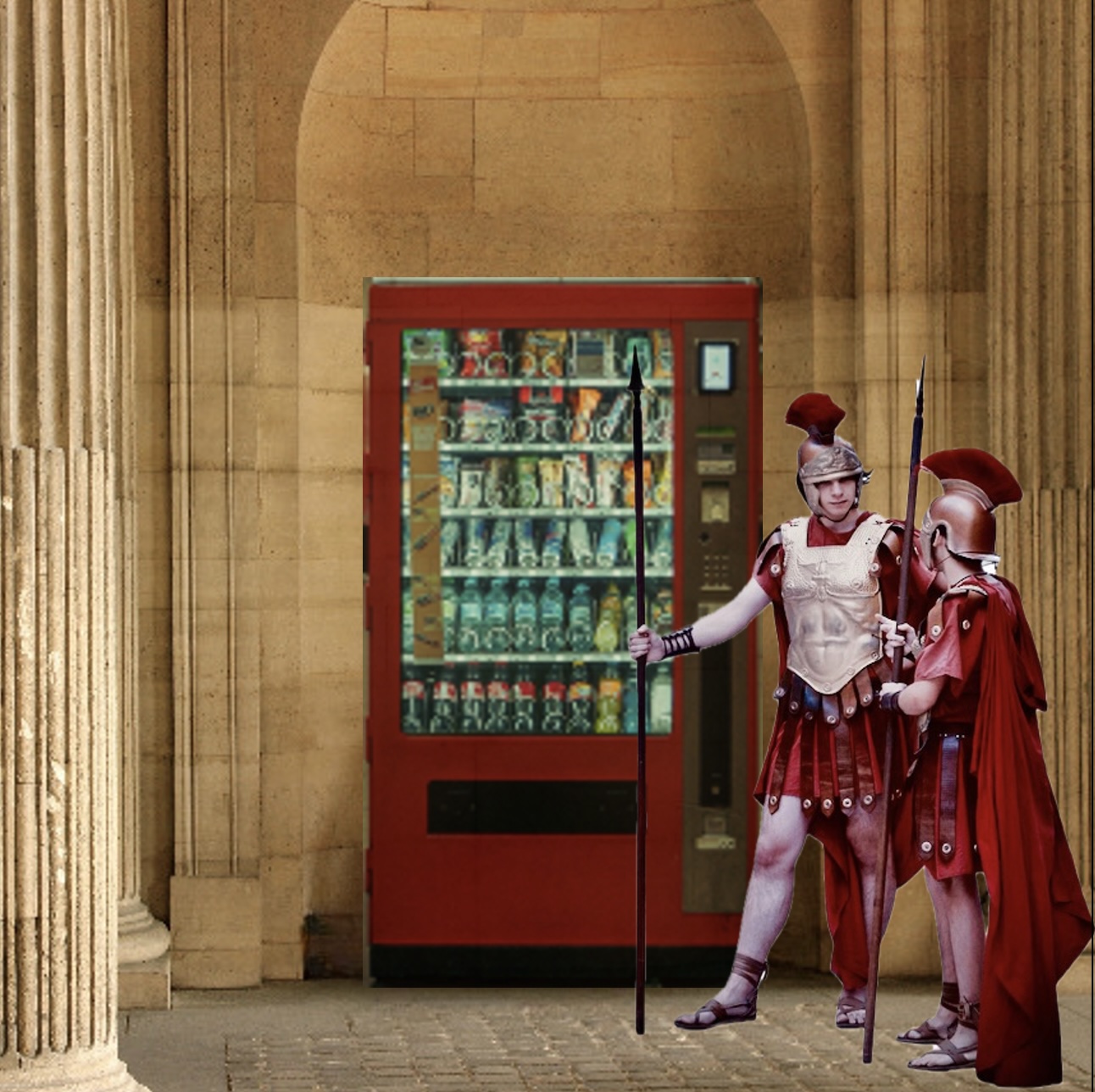
Graphic by Peg Ihinger
The Tiffany Problem has been turning up in online discussions and articles since at least 2018, but writers have been talking about it informally for at least two decades before that, particularly in science fiction and fantasy circles. My first encounter with the term was in the 1990s, when a science-fiction-writer colleague complained to me that her next book was set in 2050, and by then all the giggly middle-school and high school girls named Tiffany (it was a popular name in the 1980s and 90s) would be grandmothers, and it just didn’t feel right.
These days, the term “Tiffany Problem” refers to the situation in which a historically accurate fact is perceived as being anachronistic. The term derives from the fact that the name “Tiffany” has been in use since the 12th century (and was quite popular in the 17th), but writers of historical or imaginary-world fiction can’t use it because to most readers the name sounds modern.
The problem for writers, at its base, is that when a reader’s feelings, assumptions, or emotions about something come into conflict with what a story is presenting to them, the feelings and assumptions usually win, even if the reader is aware that what the story is saying is factual. It is obvious that if a lot of girls are being named Tiffany in the 1980s and 1990s, there will be a lot of grandmothers named Tiffany in 2050, but when one’s present reality is that all the Tiffanys around you are giggly high school students or middle-schoolers, it just doesn’t feel right.
The Tiffany problem covers a lot more than character names. There are all kinds of unlikely-but-true and improbable-sounding-but-totally-factual tidbits scattered across history. I’ve known for at least thirty years that there were coin-operated vending machines in the Roman Empire, but I also know that seeing one in a a novel set in the first century CE would jolt me right out of the story. And when I was looking for British Regency-era street slang, I discovered that calling policemen “pigs” started in the 1600s, not the 1960s. (It didn’t matter. There was no way using the term in an 1816 setting would sound anything but anachronistic, no matter what I knew to be true about its actual usage at that time.)
Some of the things that fall under the Tiffany problem are things that “everybody knows” that aren’t accurate or that ignore context. “Everybody knows” the Chinese invented gunpowder, but “they just used it for fireworks” instead of making guns. Not quite. The Chinese had different materials available, and they didn’t build big stone castles that needed cannons to knock them down. They used gunpowder to make flame-throwing weapons instead of weapons that shot pellets.
When the Tiffany problem comes up around the dining room table, you can argue facts. (It may not convince people, but you are at least there and can argue.) When it comes up in a book and jolts the reader out of the story, not only is the author not there (and thus unable to argue), but the damage has also been done—the reader’s suspension of disbelief has been broken and they’re out of the story. At that point, they’re unlikely to reengage, even if they eventually discover and accept the facts.
Dealing with the Tiffany Problem requires, first of all, being aware of it. Writers have their own beliefs about history and what “feels right,” and those beliefs are often very strong. Research is important to avoid truly getting something wrong…but research also leads to turning up more pseudo-anachronisms, some of which the writer may want desperately to include in a story.
There are three ways of dealing with the problem. The first is to sigh and avoid it. Rename the girl from 1630 “Eleanor” or “Margret,” even if she’ll always be Tiffany in the writer’s head. Don’t use the accurate-but-modern-sounding slang, or mention the seemingly-anachronistic-but-real Roman Empire vending machines. Often, this is the only way to avoid the Tiffany problem, though you are allowed to complain bitterly to anyone who will listen about having to do it this way.
The second possibility is to leave the detail in, but push it so far into the background that hardly anyone will notice and/or call it something that is accurate but no one will recognize. Having a Roman centurion say in passing, “I stopped to get this from the pneumatica vas” is unlikely to trigger any “too modern” reactions, even though he’s saying he bought something from what we would call a vending machine. You can also try putting an author’s note at the end of the novel that gives your reference sources, but in my experience the sort of people who complain about this either don’t read these or don’t believe them.
The final alternative is the most difficult and requires much more work, but can be extremely satisfying if one can pull it off: Make the “anachronism” work within the story, the way one would make any invented detail work. This means one cannot use first-century vending machines as a background detail—one has to justify their existence within the story world. Usually, this means bringing the thing to the front of the story by (for instance) making the process of inventing one (or importing one) a part of the plot, not part of the setting.
The larger the gap between the era something actually happened and the time in which most people believe it happened, the harder it is to make the historical reality work in a piece of fiction, and the more “modern” something is considered (like the name Tiffany), the shorter the believable gap is.


Great points.
Sometimes a morsel of context might be enough to deflect the problem. Georgette Heyer’s Regency romance *The Nonesuch* actually does have a character named Tiffany (who is, come to think of it, the Regency equivalent of a giggly high-school girl). But she’s introduced with her full name, Theophania, which makes the nickname feel reasonable. Pulling the pseudo-anachronism just far enough into the foreground to justify it might work.