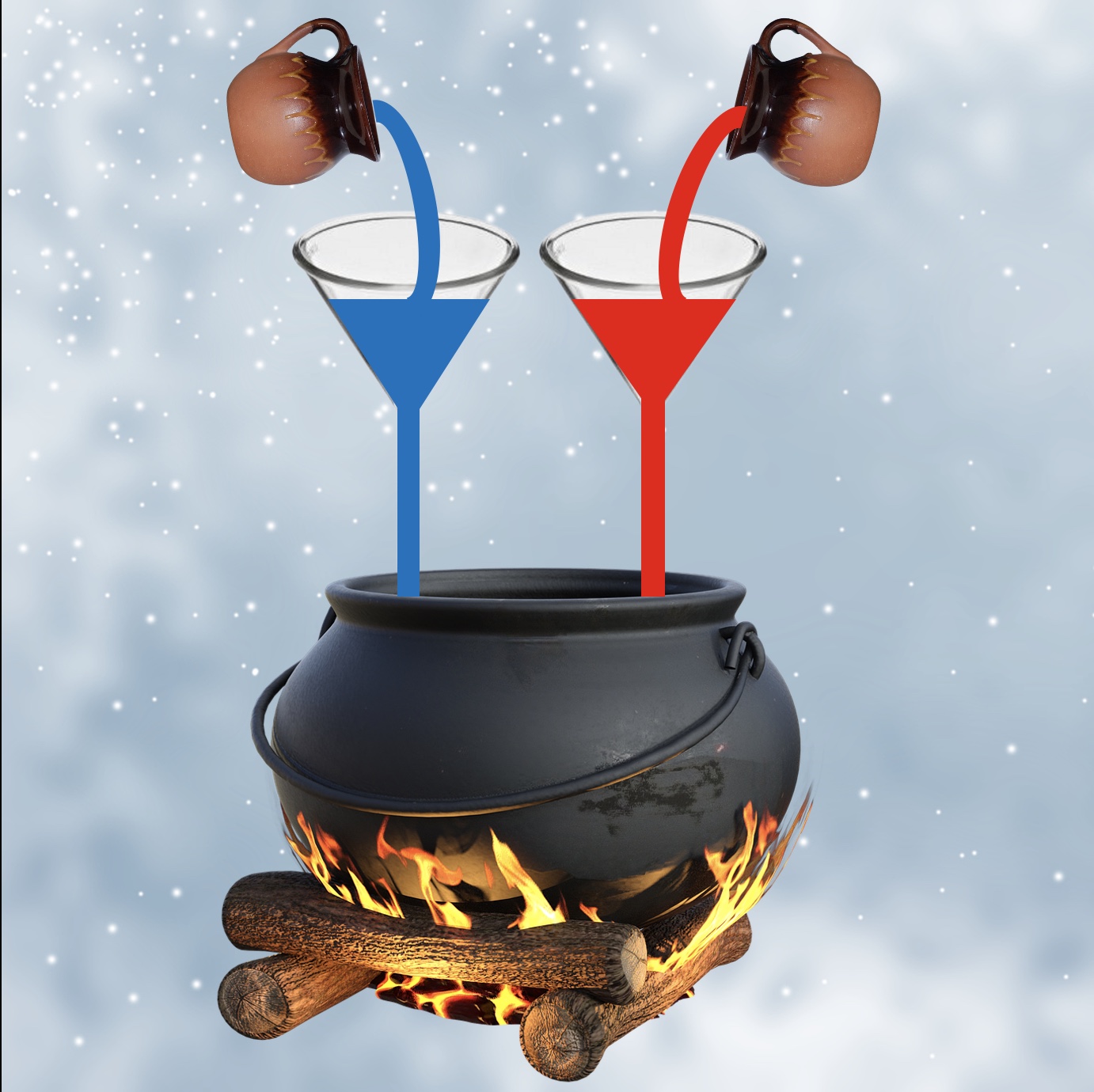
Graphic by Peg Ihinger
What is a “B” plot?
Like most writing jargon, it depends on who you ask. On the most fundamental level, the A plot is the main storyline, the central problem that, once solved, means the story is over. The dragon is dead/tamed; the war is over; the murderer has been arrested; the right man has proposed to the heroine, etc. The B and C plots are major subplots.
That’s the basics. But the term “B plot” originated in TV scriptwriting, where the strict time limits and the structure imposed by commercial breaks every fifteen minutes meant there wasn’t a lot of room for subplots. Novel length is more flexible, running from 50,000 words to 250,000 words or more. This means there’s room for multiple subplots, not just a B and/or C plot.
The result is that you see everything from specific formulas for the number of pages/words/minutes that a novel or script should devote to the A plot vs. the B and/or C plots, to pronouncements like “the B plot is the romance” (which ignores the entire existence of Romance novels, where the romance is the A plot by definition) and attempts to extend the A/B plot formulas to C, D, and E plots.
If you have a whole string of alphabet subplots, it is highly unlikely that any formula for page-count-per-subplot is going to work, if only because, with that many subplots, there’s likely to be a lot of overlap (scenes that advance the A, C, and E plots, or B and Q). Furthermore, in a novel, a scene that advances several subplots at once is highly desirable, which further reduces the value of word-count-per-plotline formulas.
Also, note that “multiple subplots” does not necessarily mean “multiple viewpoint characters.” A single-viewpoint novel can (and usually does) have more than one plotline—at the least, one can usually identify a main (A) plotline (winning the war in an action novel; marrying the right person in a romance) and at least one major (B) subplot (romancing a fellow survivor; saving the company). Frequently, there are also subplots that the single-viewpoint character observes, which contrast with or complement the decisions the protagonist makes in the main A plot.
A B plot can therefore be almost anything; it’s not just the action-adventure protagonist’s romance subplot. The B plot can be a thematic reflection of the A plot in which secondary characters in a similar situation make different choices, ongoing comic relief, a struggle with moral/ethical issues that arise in the A plot, and so on. B plots need not involve the protagonist at all except as an adviser or observer, as when the B plot involves the sidekick’s romance or ethical choices.
In other words, the chief characteristics of a B plot do not involve its content. They involve its significance, which is frequently reflected in how much space they take up compared to an A plot (i.e., relative word count/page count/number of minutes). The story is not over when the B plot is over, which means that the B plot does not have to be resolved at the end of the book. It can finish up in the middle of the book, or (in a series) it may not resolve for several books (you see this a lot in murder-mystery and action series that have an ongoing romance B plot).
The B plot is, however, still a plot, with a beginning, middle, and end. It’s just not the central story. If the A plot is “what happens,” the B plot is “what else is happening at the same time as A.” Life isn’t ever about only one thing at a time. Even the evil Mayor in Buffy the Vampire Slayer had “meeting with PTA” on his to-do list, right after “become invincible.”
B-plots can edge into braided-story territory if they’re only loosely connected to the main plot/characters. For instance, an A-plot involving the Normandy invasion in World War II might have a B-plot revolving around a French family living near the invasion site, and the effects of the battle on their home and family. Or an A-plot that’s a present-day search for a powerful magical McGuffin, and a B-plot that takes place hundreds of years earlier when the McGuffin was deliberately hidden in order to avoid disaster.
Occasionally, an author gets caught up in the B plot, to the point where it gradually becomes the A plot. The trouble is that when the writer starts off with what looks like an adventure plot, but gets so interested in the political-intrigue (or romance, or emotional growth, or…) B plot that halfway through, the B plot takes over, and the adventure/quest/whatever A plot never really gets resolved. This breaks the implicit promise the writer made to the reader (i.e., “This is an adventure story”) in the first few chapters, which will make many readers throw the book across the room.
There are ways to pull off this kind of bait-and-switch, but they usually involve either massive front-end revisions, or setting up the hand-off right from the beginning (i.e., the writer is switching the A and B plots intentionally, because they’re experimenting with something fancy in the story structure).
Finally, not all stories need an explicit B plot. Sometimes, episodic subplots are too integral to solving the central plot-problem to be considered a B plot. Other times, things that would normally be thought of as the B plot are woven so seamlessly into the central plotline that they’re impossible to tease out or see as a separate subplot. This is fine. Thinking about structuring a story as an A plot, a B plot, and a C plot, or as a central plotline with subplots, is just a way of thinking. If it doesn’t help you write the story (or revise it), don’t worry about it. Especially if you lean toward the intuitive end of the writing scale, rather than the analytical end.


I def write intuitive scale, and remain surprised at intrusive little subplots that don’t reflect what I expect, but mostly, if they overgrow to the point of takeover, I yank them and write a side story instead.
Mostly. My origiplan for this novel (supposedly novella) was couple a accidenting their way to glory with friendly help. Except the friendly help is definitely now couple b where both pairs get equal billing and everything *else* is a subplot.
Which due to the general structure of the story is neither yankable nor pruneable. Sometimes. (sigh)
The webcomic script I’m working on has three basic plotlines for the MC: she moves to a new place and becomes steadily closer to her two new friends, eventually becoming part of their relationship; she works through her feelings about the birth mother she just met; she deals with an assignment at work that lets her show her mettle.
I’m more of an intuitive writer, so this is all a bit fuzzy, but I think the framing that works for me is that the first two are a sort of double-stranded A plot and the third one is the B plot.
In Even After, I have Biancabella’s quest to stop her mother, that’s the A plot. And then there is Biancabella’s interaction with her half-sister Snow White and their relationship. And then there is Constance’s rash promise and what she has to do because of it.
Among many others. . . .
A,B, C and all the rest wouldn’t really be useful.
Other times, things that would normally be thought of as the B plot are woven so seamlessly into the central plotline that they’re impossible to tease out or see as a separate subplot.
I think I’m going to claim this is what I was doing in my first novel. The struggle with moral/ethical issues really is the A plot, and the action that gives rise to those issues is the B. But they’re kind of the same thing; the main characteer ends up running her own daughter as an asset inside a hostile organization… which is awful close to what the MC was opposing the hostile organization over in the first place. My early-writer attempts to graft more action onto that to boost it into “A” plot status did not do the book any favors.