Graphic by Peg Ihinger
WARNING: A Facebook “fan page” for me has been hacked; we’re working on getting it fixed, but it is going to take time because I didn’t set the thing up myself. In the meantime, I’m told that scammers do this to try to get followers’ emails and use them to request money. I get money from fans buying my books, not from asking for handouts. Please pass the word around if you hear about it. I am probably going to continue putting this on posts for the next few weeks.
———————————-
I’m currently in the process of working out the central plot for two completely different books, one of which will probably be the next one I write. Here is a summary of my process so far, and some thoughts about the differences.
The first possible WIP is a sequel, so for this one I have two prior books full of characters, background, plots and subplots, plus some underdeveloped ideas and characters, and a few completely unused bits. The biggest and most useful things, though, are the unintended consequences of the character’s recent actions.
My first task was to collect the dangling plot threads from the first two books. I started with a list of things I knew were issues, plus a list of subplots that I’d thought about during writing the first two books, but never really developed. These ranged from major problems (potential world war) to minor annoyances (what to do with that inconvenient statue blocking the road into town). I also added a “consequences” list containing possible reactions to and results of the actions of the first two books.
Then I studied the lists. The bones of the action plot—what the central plot problem is, when it hits, and various possible ways it can be resolved—arose fairly naturally from considering all those pieces (particularly the logical consequences of what’s happened in the last two books). Though I’ll admit, it’s been a bit like putting together a jigsaw puzzle without having a picture of what it’s supposed to look like at the end (you have to depend on matching up the teeny bit of the picture that’s on each piece).
The second possible project started is entirely new, so I had none of that. I had a character and a situation, which collided with an interesting magic system I’d been thinking about for a while now. That’s it. So I had to develop the rest.
For this one, the emotional plot is the center of the story, and it fell into place right away. (This is unusual for me; it’s usually the action layer that I start with.) At that point, I knew what emotional points I wanted to hit (that is, when in the book my protagonist needed to have a meltdown or an epiphany about preventing the future disasters), but I had no idea what was happening to cause them to happen. I didn’t even know whether the book was set in a modern magical society, in ancient China, or somewhere in between.
In other words, if plotting the first book has been like putting together a jigsaw puzzle based just on the tiny picture on each piece, this one is like putting together a jigsaw puzzle with just the grey cardboard on the back of the puzzle pieces showing. And half the pieces still missing.
So I made some arbitrary decisions based on what I do and don’t want to write next. Not alternate history, not modern, interesting magic, “something different.” I settled on a city-state commonwealth, to be located at a strategic position along multiple trade routes, known for its schools of magic, roughly at a late-medieval/early-Renaissance magic/tech/cultural level. (I want a magical version of the Black Death, I think, but I haven’t got that part yet.)
Then I started developing its geography and history, up to the start of the story. Along the way, I got ideas for developing my protagonist’s actual background that intersect perfectly with his choice of magical specialization. Researching the geography of cities like Pittsburg, Luxembourg City, New Orleans, and Florence got me designing maps and establishing rival city-states in the area, which led to the invention of a villain who will probably have something to do with the disasters I need (which I still don’t have nailed down). Overall, though, it’s developing nicely.
The main difference between the two books is that for the first one, picking a plotline involves pruning of details and possible plots, while the second is still very much at the making-up-stuff-to-pick-from stage. (I’m planning on spending some of this week mapping, for which I recommend ProFantasy’s program Campaign Cartographer 3 https://www.profantasy.com/products/cc3.asp It’s map designing for people who are obsessive about details, intended for tabletop gaming, but I find it enormously useful).
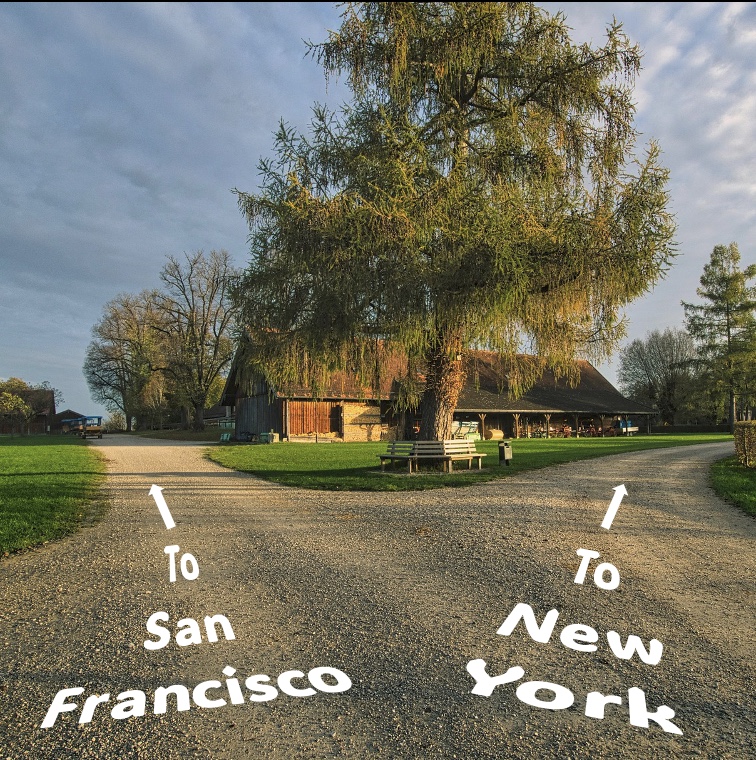
Both possible books are at the big picture stage, when I’m deciding whether this road trip is heading for New York or for San Francisco. I only have the sketchiest idea of how to get there (“head East/West until I hit ocean”) and even less notion of what might happen along the way. I can sum up the current “plot” in a medium-sized paragraph, or even a long-ish sentence, but it includes a lot of “…and then a bunch of stuff happens, until…”
The next stage is expanding that sketchy paragraph into something more solid (“bunch of stuff” has to become at least a list like “kidnapping the princess, accidentally blowing up the castle with magic while escaping the dungeon, and preventing the king’s poisoning, until…”), and then into a more detailed multi-page summary explaining why and how they successfully kidnapped the princess, ended up in the dungeon and escaped, etc.
Right now, I have enough to make me want to get started on the book itself. However, I know from experience that I really should have at least a five-page treatise on the plot (as well as many pages of notes on background, history, geography, culture, etc.) before my process will kick into gear properly. A ten-to-twenty page outline would be even better, but I usually lose patience before I get to that point. Because in both cases, I now have enough stuff for my backbrain to start throwing out specific scenes, and I want to get them down.
The problem is, again from experience, that if I shift my focus too soon from the top-level plot layer (what the protagonist has to accomplish by the end of this book) to the bottom-level plot layer (what the protagonist has to do right now), my backbrain will stop sending up the middle-level details I still need, and I’m far more likely to write myself into a corner. It’s a balancing act.
By then, maybe I’ll have a better idea of what I’m writing next. Oh, and if anyone is going to be in Minneapolis the first weekend in April, Minicon 59 https://mnstf.org/minicon59/ is happening from the evening of Thursday, April 2 to Sunday, April 5, and I’m writer guest of honor this year.


I’ve started asking myself a question before/early on in any potential project, one that I never used to.
“What’s different about this one?”
I’ve found if I don’t challenge myself somehow, the project never gets off the ground. Trying to write something too similar to something I’ve already done torpedoes the whole thing.
Not sure if this is part of anyone else’s process, but then every writer is unique…