Graphic by Peg Ihinger
Once, long ago, I heard a writer complain that writing descriptions of setting was “saying the boring part out loud.”
Okay, obviously that person finds descriptions boring, probably as both a reader and a writer. If that’s you, my advice is to figure out what the minimum necessary setting and landscape is, and stick to that. (Some description is almost always necessary—you can’t plant a gun on the mantelpiece if your characters are standing around in a white fog. It’s even a little odd if they’re in a white fog with a mantelpiece floating in it somewhere—at minimum, you want them to be in a room with a fireplace that has a mantelpiece to put the gun on. And if you don’t want the readers to immediately go “Oh, gun on mantelpiece; someone is getting shot later on…” then you should really mention a few other things in the room as camouflage.)
In writing terms, setting is the complete environment. It includes both the physical elements like curtains and trees, rugs and mountains, coffee tables and animal barns, as well as less tangible things like culture, historical time period, politics, social customs, economics and technology. Setting is the world the writer builds within the book.
Landscape is a subcategory of setting. It’s the general outdoor physical environment in which the story takes place. There are urban landscapes and rural landscapes, so “landscape” can include dams and roads, bridges, skyscrapers, houses, and other manmade structures, even though it’s usually thought of as things like geology, geography, flora, and fauna. However, “landscape” does not include interior decorating, while “setting” most certainly can.
Urban landscapes are mostly man-made, so they are usually more concentrated and change a lot faster than rural ones. Compare a picture of New York City from 1920 to one from 2020, and you’d hardly know they’re the same city. Look at pictures of the Rocky Mountains or a wheat farm in Kansas over the same period, and it’s hard to say whether they were taken a year apart or a century apart. Settings often include more than one landscape (for instance, most of Jane Austen’s works include both urban landscapes (London, Bath, Brighton) and rural ones (villages and country estates).
Because setting is a broader term than landscape, any real-world setting is likely to include quite a lot of things that some readers will be familiar with, and will therefore know if the writer gets details wrong. Worse, they won’t all be the same kinds of things—some readers will spot problems with locations of buildings or the types of plants in a particular area; others will know details of blacksmithing or plowing, fashion, dance, language and idiom. The larger the readership, the more likely it is that somebody will be a true expert who can catch details, from the important to the downright picky, that the writer has gotten wrong.
This adds to the temptation to leave out as many details as possible, on the theory that if one sticks to generic nouns and adjectives, nobody can complain that widgets don’t work like that. This leads to sentences like “He grabbed the weapon and attacked. After a fierce fight, he escaped.” Which, to my ears, sounds like a summary, not a fight scene.
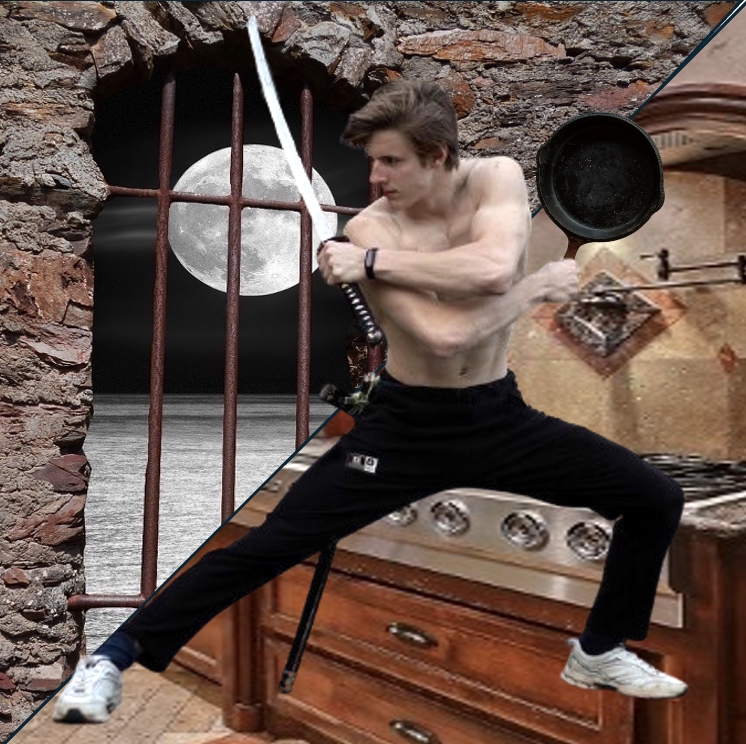
Furthermore, the generic sentences leave the character moving through a gray fog. I don’t know whether he’s grabbing a cast-iron frying pan from the stove to fend off a burglar; grabbing a laser rifle to fight off the aliens, rescue the remaining crew of the starship, and escape with everybody in one of the lifeboats; or grabbing a sword to fight his way through the palace guards and escape the dungeon. Some of those things will presumably be clear from whatever has been happening in the story up to this point, but even if it’s already clear that this is the fending-off-a-burglar scenario rather than the escaping-a-medieval-dungeon one, most readers like enough details to be able to visualize the scene clearly.
Setting and landscape affect who the characters are, what their expectations are, even what kind of knowledge or skill they have. People expect what they’re used to, whether that’s having to lock their garbage cans to keep out the bears, having to park their car in open spaces so that the roof doesn’t dent when a ripe coconut falls on it, being able to ski every winter. Some of the pioneers left the western Dakotas and Montana and went back home because they couldn’t stand the “big sky,” and some people from big sky country feel claustrophobic in forests and urban landscapes where they can’t see the horizon.
These kinds of assumptions about what is “normal” affect writers and readers as well as characters. When presented with a gray fog description, readers will fill it with what they’re used to. And if they picture something very different from what the author was imagining, sooner or later something in the story is likely to clash with their mental picture—the character is going to be surprised by bears or coconuts dropping on them, or they’re going to shoot someone with the generic weapon the reader was picturing as a sword. Writers may not even realize that they’ve made unconscious assumptions about the book world until something comes back to bite them in the middle of a draft, when the assumption that the main character knows how to fish runs up against the fact that they lived their life up to now in a desert.
This is the main reason I developed my worldbuilding questions (https://pcwrede.com/fantasy-worldbuilding-questions/), starting around 1984: I kept running into details of setting (culture, landscape, history, fashion, customs…) that I needed to know, and needed not to be late-20th-century assumptions, and every time I did, I had to stop writing for a week or more to make them up well enough to fit whatever I’d invented so far. It happened a lot, which is why there are so many of them. It also means that there are gaps—some areas of life/society/history/landscape never bit me, so they never got added to the list. I don’t use them consistently, and I haven’t ever gone through actually writing out notes on each question. They’re more of a trigger list now—things I look at an think, “given what I know about the characters and plot, are they likely to get involved enough with sculpture or statues that I need to make them up specifically, or can I just stick something abstract in front of the palace and call it good?”


Don’t forget you can use setting to help tell your story, too. If I’m going to write of unrequited love, I’ll make sure to mention a dining table with only one chair. Things like that.
That detail’s in both my WIP and the one you read!
Kay has only one chair in her apartment (and does not get up to offer it to a guest) because no one else is ever there, and she likes it that way.
Ryan has two, which he finds bitterly ironic as in two years of living on the space station no one has ever entered his room, for fear of telepath-cooties. He does *not* like it that way, and has a strong reaction when someone finally sits in the second chair.
Currently trying to write a scene on the alien starship where there are no chairs at all, and the EarthGov military guy can’t bring himself to have an important discussion while sitting on the mycelial floorin g, so he is pacing around looking uncomfortable and out of place.
I think you can be crisp with description, but you can’t leave it out entirely. Being on the alien starship has got to be different from being on the human station, or there’s no point in going there (narratively speaking). But if I picture Kay’s one chair as a fancy high-backed director’s chair and you picture it as a plain second-hand office chair, probably no harm done.
And here I was thinking I’d come up with a nice touch for a comment here, only I was inadvertently swiping from you! Shows how frazzled I am…
Thank you for catching that!!
when the assumption that the main character knows how to fish runs up against the fact that they lived their life up to now in a desert.
*grin* I had to deal with that when I started the current WIP — how does my city-boy main character know enough to even try to survive in the post-Apocalypse landscape?
I’ve gotten a lot of mileage out of his nephew having been working on becoming an Eagle scout.
Not only will there be experts in every field you mention, there will be people who get it all wrong! People who, say, insist that green and purple were ordinary colors to wear, and your hero was wrong to notice that as a sign of wealth.
At some point this just has to be filed under “can’t please everyone.” Especially when they’re wrong: but even when they’re right, you can’t always fix it.
One of Kathryn Kurtz’ Deryni novels hinges on a plot point that flatly contradicts the genetics note in a previous book in the series. Dunno how she missed this, but likely there was a point in writing where fixing it just wasn’t possible without rewriting the whole thing, and how many people is it really going to bother?
The issue is, did a male character inherit his magical gifts from his father? But the answer will always be no, because the magical gifts are X-linked (she had perhaps foolishly established) and you always get your X from your mother. This might be a lesson about not establishing too much. She didn’t need to write an appendix about X-linkage in a fantasy novel in the first place. Maybe she’d have been better off keeping that detail to herself.
Sorry, correction: if you are male you always get your X from your mother (as if you got one from your father, you would be female, barring weird genetic anomalies).
In a fantasy setting, why is it necessary to have heritable traits be based on chromosomes or even genes?
And even if there are genes, a gene expressing as dominant or recessive might depend on supernatural elements. Like the character’s natal horoscope.
Like I say, I think she was unwise. Appendixes in my opinion are often fun for the writer, but less often useful to the reader. (The ones in Dune are a glorious counterexample.) Kurtz could have avoided the whole problem by just not saying how the genetics worked, and geeks like me would then have discarded the X-linkage hypothesis when the bishop’s son inherited it from his dad. No harm, no foul.
Sorry, my reply was mis-located. I was making a comment on story-genetics possibilities in fantasy settings in general rather than on what Kurtz did in her Deryni books.
I don’t disagree about her being unwise.
Demographic (or what I call ‘demographic’) questions are what bug me and my internal editor.
How big should the local villages, small towns, large towns, and big cities be? What kinds of establishments (high-end eateries, low dives, brothels, tailor shops, etc.) can they support at least one of, and if more than one then how many of each?
If a character is a relatively big shot in-setting, how many servants and minions can they be expected to have?
If there are street gangs, how big are they?
And I know “it depends.” The number of servants, for example, is going to depend on the availability of barbarian wenches captured in slave raids, desperate poor folk looking for any available position, manufactured robot-maids, out-of-work djinn, and labor-saving devices.
I haven’t hit this as often in writing but it comes up *constantly* in our roleplaying games. The fact that Paizo sometimes calls communities of 10K “city” really trips us up. And then bits of it will have city-like qualities, like highly specialized businesses, whereas the map will look like there are only a few hundred people.
I find myself going by modern comparisons. 10K people? Well, Port Townsend has 10K people, what kinds of businesses does it support? But this isn’t as good in pre- or post-modern settings.
(Our favorite Paizo error of this kind, though not relevant to your topic, is the “little shack in the swamp” in one of their modules. The little shack has two stories, seven rooms and a hidden saferoom. We’ve been joking about it ever since!)
Oh. I was doing that with country population / territory size and large cities but hadn’t done smaller settlements yet.
Brilliant.
Whereas I haven’t hit this as often in my roleplaying games but it comes up constantly in my writing.
As for settlements of 10K people, I don’t blink at calling them “cities,” especially in a medievaloid fantasy setting. Troyes, the example used in Frances and Joseph Gies’ Life in a Medieval City had IIRC an estimate population of about that (and per Wikipedia has a current population of 62K).
Now the mismatch you describe between the map and the stated population would bug me.
You can form a quite small city even here in the US.
See Alaska. Large land area, small population in their cities
I guess there’s a wide range of what “city” means. The 10K communities in Alaska, such as Wasilla, didn’t feel like cities to me. (Wasilla is close to Anchorage, which *is* a city, and that discourages people from ever calling it one.)
I spent a couple weeks in Leuven, Belgium, which apparently was a town of about 10K to 20K in late medieval times; and I guess I could call that one a city. It’s very dense. Not large–it had to fit inside its wall–but completely and densely built over within that footprint. …It’s so different from Wasilla that I’m realizing I’m way too wedded to modern viewpoint here. So, thank you.
Hamlet
Village
Settlement
Small Town
Town
Small City
City
Metropolis
Megalopolis (or something like that)
That’s more or less the terminology I use. The only differentiation I’ve had between town and city is that most people in a town are reasonably acquainted with each other, at least by sight, and cities are full of strangers.
Probably not a properly historical viewpoint on my part either…