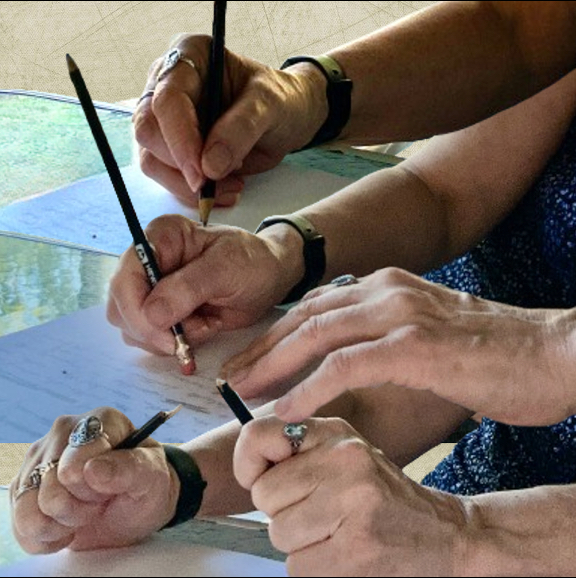
 Revising is one of those things that some writers love and others hate. There are various reasons for this. Writers who love it are usually the ones that find fixing things easier than making them up. Writers who hate it come in a lot of varieties: the pantser who finds revisiting their work boring, the writer whose work sets up like concrete within ten minutes of typing it; the writer who leaves out all the tricky bits they didn’t know how to do, hoping no one will notice, and then finds that they need to go back and put them in anyway; the writer who stretched a little too far and now realizes they have to fix all the tricky bits that they aren’t sure they have the chops to handle.
The first thing both the love-it and hate-it writers need to realize is that revising is a collection of skills that can be learned. The second thing is that exactly which aspects to learn and how to go about learning them is going to be very different for everybody, depending on what they need to do, why they’re doing it, why they love or hate revising, and what their writing process was like in the first place.
Writers who produce prose that sets up like concrete, for instance, will need to figure out how to jackhammer their prose apart so as to slide the new stuff in as seamlessly as possible. They will also have to accept the fact that, to them, it may take years before the new stuff feels right, even though nobody else has a problem with it. For writers who skipped over important bits, how they set about revising depends on whether they left those bits out because they didn’t know how to write them, or because they hate doing something the missing bit will require (too bloody, too emotional, too many people present, too much of whatever the writer doesn’t want to write).
In all cases, learning involves practice. Sorry.
In addition, learning to revise depends on what kind of revision is required. Do you need to add a scene? Cut a scene and close things up? Delete or rephrase every use of “flirbil”? Remove two lines from every single page of the ms. (or from every page of dialog)? Do a thorough check for your own particular overused words/phrases/punctuation/syntax-and-grammar tics? (I recommend the last in all cases, just because, but it can be a good way of learning how to revise.)
There are a couple of tricks that can be helpful regardless of what one has to do and why. The first one is: change the appearance of the manuscript. Change the font dramatically and switch from page view to web view (or just change the margins so that the lines don’t break in the same places). It is amazing how much easier it can be to see something with new eyes when it actually looks different.
Then stop and think about what kind of revision the story needs, and the mechanical things it will require. Adding a new chapter or a new scene, whole and entire, is a different process from changing the pacing of the middle three chapters or punching up the emotional impact of a subplot that weaves through an entire book. Adding a scene needs a bunch of entirely new words, plus whatever edits need to be made to fit that scene into the narrative (which can be transition paragraphs to get into and out of the new scene, additional foreshadowing, additional follow-up as the effects ripple through, or all of the above). Clarifying a subplot or increasing its impact can require anything from a couple of new scenes to a string of minor alterations to a dozen different conversations, actions, or reactions. Pacing…well, pacing may need a post of its own, because what you do depends on whether it’s too slow, too fast, or too lumpy.
When the revision is about inserting explanatory information or foreshadowing that somehow got left out the first time, there are two approaches. One is to come up with a single new scene that provides everything that’s missing in one go, and the other is to sprinkle it through the existing text like breadcrumbs. Sometimes one is a better choice than the other; it depends on how central and/or how much of a revelation the new information is.
When I make this kind of change, my first step is to flag the exact scene in which the story stopped making sense because the information the characters and/or reader needed was missing/wrong/not-on-the-page. I flag that scene, and then I start working my way backwards through the manuscript. My goal is to flag as many possible places where the characters might have seen or done or said (or, in the case of my POV character, thought) about whatever important thing is missing…and especially to flag anything they see/do/say/etc. that would contradict the missing info. Sometimes, I have forty or fifty little comment notes; sometimes, only three or four.
At that point, I focus on the contradictions, because the characters are already talking about the missing issue. I’m going to have to correct them anyway, and it is usually fairly easy to change what’s happening or being talked about to provide a little more correct information or foreshadowing of the missing/revised information, rather than just delete the contradictions.
Then I go through the other flagged places, considering one at a time where a conversation or a set of actions can go slightly differently for a few lines (which, of course, will focus on the missing information). When I think I have everything the way I want it, I read over it again, in order this time.
Working backwards makes it easier for me to concentrate on the changes I want without getting wrapped around the rest of the story. This often works for other sorts of revisions, too, as long as the ones that come early in the story (which will be the last ones I get to) won’t have a significant ripple effect. Your mileage may vary.


“Writers who hate it come in a lot of varieties…” followed by a list of me.
@Wolf – me too.
One thing that might help is, for beginning writers, when you first start revising, stay alert for any trends in your own writing you can spot. “I keep switching to present/past tense,” or “All the warriors sound like the jocks I knew in high school.” Once you know your problem area(s), you can try to work on them in the draft stage, not revisions.
As for me, even now, when the narrative grabs me, my back brain yells, “Damn the description! Full speed ahead!” And I have to go back and put description in later. (Usually about 2k words worth in a 100k novel.)
I remember somebody recommending using Comic Sans for revising a manuscript.
That was me. I switch to Comic Sans for serious revision, with that font chosen because it looks too funny to take the text seriously as being set in concrete.
I’ve used Comic Sans a time or two. I also like script fonts, because my brain thinks that if it looks like handwriting, I’m going to have to type it up later. And then it makes sense to me to fix everything before I type it in, so that I won’t have to change things once it looks like a proper manuscript again. Brains are funny things.
I recently revised a short scene that needed the emotional side of things punched up and some infodumping removed, and what I ended up doing was reading through the original version and making a list of things to keep, things to add, and things to cut. Then I started a new page and rewrote the whole scene from scratch (with some bits copy-pasted from the original).
When I pulled *The Other Princess* out of the trunk, I thought I was just going tweak the ending.
It ended getting three massive rewrites.
Ryan falls in love–or realizes that he has fallen in love–too quickly, I don’t think it works, but I am puzzling hard over how to fix it. Do I need more scenes, or more reactions in the current scenes? More reflection?
There aren’t a lot of other characters whose reactions can help reflect what’s going on with Ryan. He’s living in a bubble, with the object of his affections being the only one who can really talk to him. (Which makes, as he notes with annoyance, falling for “her” altogether too easy.)
I have written two or three chapters of book 3 while I avoid fixing this serious issue in book 2.
“What was I thinking? Why on earth does this character talk like that, reversing himself in two sentences without good reason?”
It’s amazing what I discover in first drafts. In particular, that I had made a change in plans later than I remembered, so the earlier scenes have to be updated.
Second place is when an elegant, smooth transition has to be jackhammered open to put in stuff that needs to go there.
I recommend that font change. Also, put it in a different color, to help!
Oof I feel so called out. It’s not interesting to come back once I’ve written something. It’s hard. But I do need to practice.
In my heart I feel that if I just write a new first draft of something else, THIS one will be perfect and I won’t have to revise… but that isn’t true
Pacing is my bane. My first novella was well-paced in the first draft, but it was only a novella. My second work, a short novel, is mostly too slow – but sometimes too rushed. Not enough happens early on, but the love story moves too fast, and we don’t get enough time with the Creatures. The house is super present early on, but needs more emotional impact later. The forest is super present later, but needs to be more of a threatening presence earlier. Early on, it’s unclear what the problem is – why you should keep reading, what the main character doesn’t have. These mostly have solutions that are pretty clear: play up her loneliness early on, giving more interest to the romance subplot, and make said subplot more detailed. Make the forest more present and scary from the beginning; weave in the dreams with happenings from daily life so it’s clear that Something Will Happen and the reader is waiting to find out what. Expand the time the creatures get before they leave. I feel like I know what I need to do! I just have no idea how to do it.
I should start by printing it out, I think. Shuffling papers is so much better than scrolling for seeing things side by side.
When I was a little kid, writing was fine. I loved and adored editing. Then my main really got writing swing, I lost that.
Right now, digging into the guts of the novel I supposedly don’t care about so I can safely experiment and maybe accidentally kill it, I’m reminded that if you can edit in creative mode, I still love editing. Outlining may kill a book for me, but analysing and revising is just fun.
(late to the party as usual)
I didn’t really think there was a way to do it other than to just do it, more’s the pity. Though I will have to remember the font trick, which may make the jackhammer easier to apply.
I have to (1) rewrite one of the major confrontations to include the lurking threat I wasn’t doing enough with, without distracting too much from the actual confrontation, (2) repurpose a minor scene to take out the leader of the lurking threat in a dramatically satisfying way, and (3) go back and pepper in some more hints about the lurking threat before they turn up again.
(3) was something I had always meant to do, and it kinda got dropped as I realized I didn’t have a good way to fit in the return of the lurking threat. (I do now, I think.) (2) is my get-out-of-jail-free-ish card, so that the lurking threat doesn’t take over the rest of the book, because they’re cool but it’s really NOT about them. Achieving (1) without messing up the dramatic and thematic stuff in the current version, which I really like and which they are only tangentially relevant to, is going to be hell. I wonder if I have any socks that need refolding….