Graphic by Peg Ihinger
For several decades now, I have been a staunch supporter of the notion that “good writing” is subjective, and therefore not a terribly useful standard for people who want to become writers. Looking at my recent posts, it’s been a while since I talked about this directly (though it’s come up in passing several times). It’s probably time to address it again, though I am pessimistic about whether it will stick.
“This is good writing/well-written” comes in two varieties, both of which carry invisible, implied phrases along with it. The first is when someone is recommending a book to other people, and what it almost always means is “I think this story is well-written/good writing.” It’s part of the “it’s what we mean when we point at something and say ‘that’s it'” class of definitions. It’s usually synonymous with “I really like this book,” and it doesn’t pretend to be anything but subjective.
The other variety tends to get used in literature and creative writing courses, blogs, and how-to-write advice from all sorts of people, and what it usually means is “This book is good writing/well-written because it is at or above some standard for good writing.”
This is the problematic use, and it’s problematic because there isn’t a single objective writing standard. The only truly objective rules one can apply to writing are those of spelling, grammar, and punctuation, which change depending on what language you’re using. Even so, you can actually count the number of typos, punctuation errors, etc. and set a number that marks an acceptable standard for allowable mistakes. (“Zero” is not an acceptable number. An editor once told me “The most perfect manuscript possible still has three typos in it somewhere.” He’s right.)
Unfortunately, using “perfect spelling, grammar, and punctuation” as a standard for “good writing” immediately cuts out much-respected works like Mark Twain’s The Adventures of Huckleberry Finn, Anthony Burgess’ A Clockwork Orange, and James Joyce’s Ulysses, which play around with punctuation, spelling, grammar, and/or syntax deliberately to achieve a variety of different effects. And a single glance at a legal document should be more than enough evidence of the fact that a piece of writing can be grammatically and syntactically correct, have no spelling mistakes or misused words, and be properly punctuated, and still not be considered “good writing” in any context other than a courtroom.
So “perfect spelling, grammar and punctuation” is only a conditional part of any definition of “good writing.” If an author is consciously, deliberately, and successfully playing around with the rules of English (or their own language), it’s a tour de force, something that’s “well-written” by acclamation. Which brings us back to what does “good writing” actually mean.
As a phrase, “good writing” is abstract and general. Trolling through a bunch of Google pages for a definition, I mostly found abstract adjectives: Clear. Concise. Show, don’t tell. Vivid. Sensory. Unique voice. Compelling. Immersive. Emotional connection. Honest.
That sounds lovely and reasonable…until you get down to cases. What is “clear”? When is “concise” more important than “showing” (which always takes more words than “telling”)? “Compelling” to whom? Everybody reacts to things differently. What my sister finds “compelling,” I often find boring (and vice versa). A description that’s “vivid” or “sensory” to one person may be dull or unconvincing to someone else. Books that I’d describe as overheated melodrama have connected emotionally with some of my acquaintances. And so on.
Furthermore, people’s reactions change over time. Some of the books that looked unique and original to me when I was sixteen are, at seventy-two, clearly rehashing older works and/or using tropes my teenaged self hadn’t encountered yet. (And some of those “rehashed” books are stories I still love and reread in spite of the fact that they’re not as unique and original as I’d thought on my first reading.)
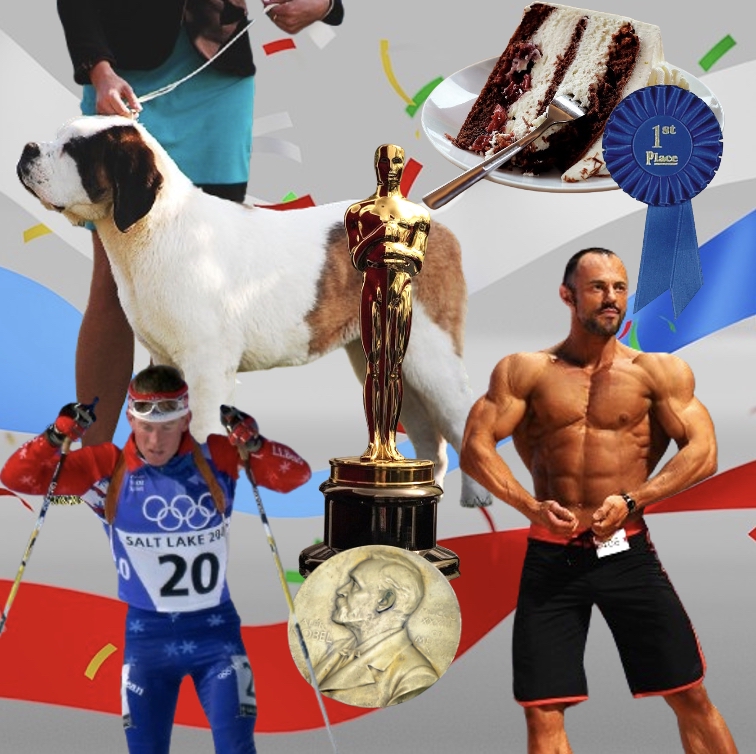
If you actually sit down and look at books that have won awards or that are on lists of “best-written books of…”, it rapidly becomes clear that the line-up of things labeled “good writing” is not even comparing apples and bananas. It’s more like comparing the “Car of the Year” winner, the Olympic cross-country ski gold medalist, the gold-foil-covered chocolate medalist for best cake, the “Best in Show” cat and dog, the winner of the “Best Picture” Oscar, and whoever got the Nobel Prize in chemistry, plus several things that got awards twenty years ago that hardly anyone remembers any more. They’re all really good at something, but there’s not enough commonality to hang the same label on all of them, much less enough to turn “what they did” into a reproducible definition of “good writing.”
And what is considered “good writing” changes, depending not only on what language is being used, but also on the audience, culture, time period, and a host of other things. In the past 400 years, Shakespeare has gone from “decently written popularity” to “premier English playwright” to “melodramatic” and back to “greatest of all time.” Moby Dick was panned by reviewers when it was written, but is now considered a classic in spite of breaking every current “good writing” rule about never using infodumps. Olaf Stapledon’s Last and First Men doesn’t really have any characters, let alone well-rounded ones. The works haven’t changed. Only the definition of “good writing,” and therefore the evaluation of them, has.
Even if you’re looking at books that were considered “good writing” in a single year, you find disagreements. There is always, always controversy about the specific titles that are on any list of “best (written) books of…” because what is “clear, concise, compelling, vivid, unique, immersive, etc.” is, at bottom, a matter of individual preferences and tastes.
Hence my ongoing argument that “good writing” is fundamentally subjective, and none of the so-called rules for good writing can be depended upon to create something people will actually want to read. They aren’t even guaranteed useful guidelines, because they’re always applied after the fact, and thus don’t say anything about how authors can or should get to whatever they’re currently emphasizing. Some writers find them helpful, but many don’t. Therefore, such rules should always, always be taken with a boulder of salt the size of the Rock of Gibraltar and an experimental attitude: Test them and see if you find them helpful. If you do, continue paying attention to them. If you don’t, forget about them. And don’t ever assume that because you find them extremely helpful (or not), some other author must also use (or ignore) them.
There Is No One True Way.


I’m reading Naomi Novik’s trilogy starting with _A Deadly Education_. At one point in book 2, her protagonist is about to go on her very first lethal-training-course run with her new team, a gauntlet of monsters awaiting them.
The author chooses to handle this action scene by… jumpcutting to just after it’s over, having the first-person narration tell us briefly what happened, and showing only the protagonist’s reaction.
Apparently Novik felt the scene did not need to be shown. I personally thought she was correct–not saying I would have known it as a writer though! (This is not a book I could conceive of myself writing, to be honest.)
It is also one of the infodumpiest novels I’ve ever read. *So* much explanation, all in first-person narration. (Just once in the first two books, the protagonist says “Reader, I–” to make it clear that she is writing this story for someone. Blink and you miss it.) Pages on pages of explanation. As far as I’m concerned she makes that work too. The very strongly flavored narrative voice may be a factor here: if the protagonist were more bland it might not work.
If there are rules they’re sort of meta-rules, like: If you do something weird you should have a reason. Your decisions should support the story you’re trying to tell. Fairly useless, though.
I wonder what will happen to the first student in a creative writing class who shows this entry to the teacher after an unfavorable grade?
I’ve taught a ton of writing classes, and created more than one. But they were all in a much more technical realm, where there really are, or at least can be, rules.
Thinking about this some more – and of course, having all that non-fiction background – I wouldn’t say “good writing” is subjective. I’d say it’s writing that fulfills its goal.
There are a lot of ways to entertain, or to amuse, which makes judging success in those areas more…interesting. But when the goal is to inform effectively and efficiently, there are a lot fewer.
Definitely informational non-fiction is a different animal.
I once attended a graduate student symposium where they had invited a very distinguished biomathematician. His talk was fairly comprehensible, but during Q&A it became evident his native language was Math, not English. After some awkwardness a colleague and I started literally translating the questions into Math, rephrasing them for the speaker, and translating his answers back into English. It was one of the most socially problematic things I’ve ever done, but from audience feedback, also one of the most appreciated. I think it’s fair to say that if written down this would have been an objective writing failure.
I should have added, my lab really needed to understand a paper by this individual, so devoted a whole lab meeting to a close-reading. And then the next, and the next. It ended up taking five solid meetings. We then sent him a page of questions and got a delighted response, clarifying all points and strongly implying that we might have been the first people who ever understood what he was saying. That, too, is an objective writing failure.
But in fiction, you can confuse the reader if that is your intent. You can withhold key information on purpose. You can contradict yourself. It just has to … work, which is a very difficult thing to pin down, and varies hugely by reader.
I hated _The Phoenix Guards._ The highly stylized, wordy, pompous narration just wrecked the story for me. Brust is a very capable writer and I suspect it was really well done–people who liked it certainly seemed to think so–but not at all to my tastes. If that manuscript had been in a pile I was grading for a creative writing class, he’d have gotten an earful from me about how bad it was!
Mountain of salt, indeed.
There’s nothing whatsoever wrong with “Highly stylized writing is not to my taste, so I can’t tell you that I liked this. It is, however, true to its stylistic intent.”
I’m turned off by almost all mainstream literature, but “Why write about the real world when you can imagine something more” is neither a fair criticism nor an evaluation of the work’s quality.
“I like it” and “It’s well made” don’t necessarily go together. (Something no one on the internet seems to be aware of…)
“Varies hugely by reader” is spot on. The stylized narrative in The Phoenix Guard was absolutely deliberate on Steve’s part. It’s also an homage to a particular English translation of Dumas’ The Three Musketeers that Steve loves, which captures the feel of Dumas’ getting-paid-by-the-word dialog and description. He’s doing a lot of very specific stuff in that series, and he’s doing them very well. Readers who don’t realize he’s riffing off things, and/or who don’t like the sort of thing he’s riffing off…well, it’s just never going to fully work for them. I mean, I know what Steve was trying to do, and I can see him doing it and appreciate the skill it took, but I have a hard time just sitting down and reading those books for fun. But a lot of my friends adore them.
I love this post, but it’s so hard to actually disregard advice that doesn’t work for you. The minute you start thinking about it, it’s ingrained in your head. You can’t stop seeing the things people talk about in your work – even if they’re not things you want to think about, even if you feel there’s a reason for them!
This is part of why writing fiction isn’t easy. Writing often involves a weird combination of confidence and humility, and how well that works for a particular writer can depend a great deal on when, where, and how much each of those things shows up. Being confident enough to put words on paper and show them to other people is necessary; being unable to accept rejection or criticism is often a dealbreaker. Being humble enough to consider alternative opinions about what one writes can be a good thing (my crit group saved me roughly three weeks of work on my editorial revisions for the WIP, at minimum), but being so humble that one’s writing becomes a committee project is generally not advisable (see joke about camels being horses designed by committee).
Being selective on when you take criticism and about what can sometimes help.
When I was first running roleplaying games for a group, we’d play 5-6 hours and then go to dinner. I learned the hard way, via some meltdowns, that I had to ask people to save criticisms for later–I was in no place to hear those over dinner, but I’d promise to tackle them before the next game.
I think a lot of people also go through a phase where new ideas are soap bubbles and you shouldn’t expose them to harsh conditions. Let them toughen up a bit first.
And I have had to say to my partner, love him dearly though I do, that I will *not* engage in debates on the topic of “genocide is the only rational response to your aliens” with him.
Maybe it would help to search your bookshelves for a couple examples of the thing you’re being told not to do–ones where you think it was done successfully. Make a notecard or something referring to these, and when the brainweasels start biting, you can look at it and think about how those authors got the thing to work.
I’m currently having the heebie-jeebies about how much pure talking the characters in my WIP are doing, and the fact that the protagonist seems to be on a trajectory to try to solve the major issue by talking about it some more (this time to the EarthGov High Council). And there are obvious problems with that, but it doesn’t mean it can’t be gotten to work. I should take my own advice and look for some talky stories that work for me.
I don’t write short fiction myself so it’s not been useful, exactly, but over the years I’ve amassed a lot of short fiction that lacks one or more of the things stories “must” have, but still works. I love Langford’s “comp.basilisk FAQ” for this. No characters. No action: in fact no plot. No dialog. 800 words of workmanlike expository prose. But it works for me–and for the editor who bought it.
Brainweasels would be a good name for a band.
Re talking to solve problems, Picard did that a lot.
I once commented to a fellow writer that I most appreciated works that were well written, to which she took great exception—which I did not understand until it became clear that what she thought I meant by “well written” was flowery, grand prose using big, obscure words and academically important phrasing, precisely the *opposite* of what I personally consider well written. If the writing calls attention to itself, it has failed its task, which is to convey the story.
But, of course, there are those stories where the point *is* for the writing to call attention to itself.
_Ella Minnow Pea_ by Mark Dunn. The whole book is a big language game: it exists almost purely to draw attention to itself. I would not have thought this could ever work for me, certainly not as more than a dry intellectual puzzle. But I found it surprisingly moving.
I’m going to comment again, because this particular entry really set me off, so I’ve been thinking about it more.
I’m working on revising my 21st novel. In a box upstairs I have my first attempt at a short story. The improvement in my craft over 50 years is undeniable. I was still trying to figure out how to put good sentences together. The result is objectively terrible.
But let me switch examples.
A favorite tv show of mine got a new head writer years ago, and he had some serious flaws. Paper-thin characterizations. Clunky dialog. Set-ups that weren’t paid off. Pay-offs that weren’t set up! All the most important plot developments taking place off-screen, and relayed to the audience by exposition. And that’s just the worst problems.
I remember seeing some forums devoted to the show, and people would complain about the writing, and the response from the ones who liked it anyway was invariably, “It’s all subjective!” (Which is why that phrase sets me off.)
There is a subjective element, certainly. But objectivity is still possible.
All the writing advice going back to Aristotle’s Poetics is, I’m convinced, based on what’s been seen to work *most often* for *most* audiences. Dramatic unity seems to go over well. So does a three-act structure. And so on.
So if you go against all that, you aren’t breaking “rules” (I agree with Ms. Wrede, there are no rules). You haven’t doomed your work. You’ve just taken more chances with more of your audience.
There’s no reason your chances won’t pay off.
On the other hand, if you “violate” a ton of these suggested approaches, the chance gets too high that, like that head writer, you’re going to turn off too much of your audience. That your writing won’t be good. It will have too many flaws, and turn away too many people.
Those “guidelines” can be used to objectively rate writing as “good” or “bad.” (As I said, I’ve done my share of bad.)
But the subjective element remains, and that is this: How people respond to your work is subjective. There’s plenty of “bad” writing out there that has its fans. There’s a lot of “good” work out there, and none of it is loved by every single reader/viewer ever. The response will always vary, and it is indeed subjective.
That’s my take, anyway.
Yeah, here I am again.
It occurs to me that the other subjective part is what criteria are chosen for “good” vs. “bad” writing. Style? Plot twistiness? Characterizations? Atmosphere?
Note also that such criteria are almost never articulated…
I got excellent feedback about a horror story I considered stupid.
One critic in 60,s sais about Lord of the Rings: “It,s childrens book Who has gone out of handsfree.”
Other critic sain about Philosopher,s Stone: “People aren,t interested some wizard school.
Trying to predict what other people will like is much harder than understanding what *you* like, and people routinely get it wrong. However if someone’s going to invest money in publishing a book they have to try…. I presume that if a publishing house stays in business it gets this right more often than not, but no one will ever get it right all the time. (Barring frightening future tech anyway.)
I personally am willing to think about how to get the reader to like the story I’m writing, but I don’t feel I can just write totally different stories. Not motivated. (Maybe I can get the fantasy novel published now–it got “wrong time for a story about the education of wizards” years ago when I submitted it.)
One could White by force what they don,t like, but uskalla the story isn,t good if the writer doesn,t love it.
“It’s the author’s responsibility to write things that they like to write and would like to read.”
―renatus, LiveJournal 28 Sept 2006