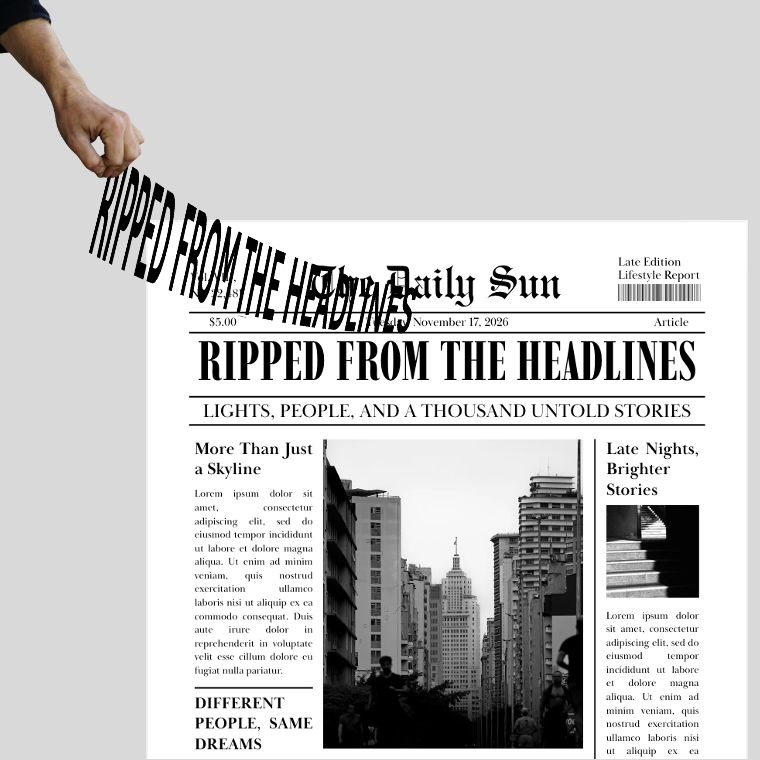
Graphic by Peg Ihinger
All fiction happens in a place that is a compromise between the real world and an imaginary one. There’s a wide range of possible compromises, ranging from a setting that reproduces the real world with great accuracy, to a totally surreal world in which the laws of physics don’t apply—mountains float, people change bodies at will, water solidifies into diamond hardness at room temperature, and nothing is predictable or repeatable.
Most of that range falls under one or more of the speculative fiction genres: fantasy, horror, science fiction, supernatural fiction, etc., but I’m going to start with the realistic end of thing.
First, there’s a hard line between “real” and “realistic.” Real stories happened; repeating them is reporting either news or history. The people, places, and events are real—you could visit the places something happened, meet the people who did it, and see whatever aftermath of events is there to be seen. (OK, in the case of history you can’t meet the people, but you can read primary sources like diaries or reports.)
Realistic fiction is only partly factual. At the start of the fictional range is historical fiction. The place and time is usually as accurate as the writer can make it; the main events may be ripped from last week’s headlines or the historical record; many of the characters may be real people doing the things they did at the time. The viewpoint character is usually invented, as are his interactions with any real people and events in the story. (Forrest Gump is an imaginary character, who therefore never met President Lyndon Johnson, President Nixon, or Raquel Welch.)
From there, more and more parts of the story are invented by the author. It usually starts with characters: the detective, the murder victim, and the suspects are usually all characters invented by the author, even if the story is set in an accurate modern-day New York. The spies, counter-spies, and sabotage plot are invented, even if the story is set in an accurate representation of the Cold War era, or during World War II.
Time-travel stories split the difference. Whether the time-travel is deliberate or accidental, the story normally centers on how the protagonist changes historical events (or prevents other, malicious time-travelers from changing things). Whichever it is, the writer usually has to know as much as possible about the actual historical time, place, and events, in order to make the reader accept that making or preventing the changes is a good idea. The characters are imaginary; the events are recognizable; and the result can be either a very different history and outcome, or the history that leads to the world we currently live in.
At this point, we’ve moved solidly into the realm of speculative fiction. Magical realism and “magic in the cracks” stories come somewhere around here. In magical realism, the world looks and feels like the real world, except that impossible things happen (like a character’s words coming out as diamonds, or the protagonist meeting a ghost), that the characters just accept. The supernatural/magical/fantastical thing is never explained or justified. In “magic in the cracks” stories, the supernatural/magical world is explicitly occurring right alongside the real (or historically real) world, and part of the story often involves keeping magic from affecting ordinary, non-magical people.
The next step involves alternate versions of reality in which the existence of magical or supernatural phenomenon has had logical consequences for the otherwise realistic world. Vampires get licenses to access blood banks; Toyota and General Motors make flying carpets instead of cars; police departments have forensic magician on staff; the Air Force is made up of people flying on dragons instead of in airplanes. Sometimes history and/or society has changed a lot as a result of magic and the supernatural being treated as real. Other times, magic is treated as a substitute for technology.
Eventually, we get to “imaginary worlds,” which often start off as being “based on” a particular culture, country, or city that the author is interested in. Sometimes it’s fairly obvious that the culture/country/city is based on Aztecs or Ancient Egypt or Venice, surrounded by different geography and history. Other times, that was the writer’s starting point and the origins are buried so deep that they’re hard to find. And sometimes, the writer starts mostly from scratch.
Up to this point, we’re looking at things that are “realistic” in the sense that most ordinary things work the way they would in the real world. The shapes of continents may not be the same, but there are continents, mountains, rivers, lakes, plains, etc. Volcanoes may be inhabited by fire elementals, but they’re still around. Animals may talk, but they eat and sleep and run around like their real-life counterparts. People grow crops, have pets, and work for a living. And then we get to the far end of the spectrum: The completely surreal.
These are the stories in which some of the fundamental rules of reality are totally broken. Gravity works in reverse or changes depending on the weather. Doors open on a random place every time they open. Rocks float, or behave like modeling clay, or melt every Thursday. The freezing point of water varies between -10 and 100 degrees Fahrenheit over the course of a day, so that everything from rivers to people freezes solid for parts of a day. The stories seldom try to provide a reason for these differences; they are just part of the way the very weird setting works.
Few stories fully embrace this kind of setting, because it’s very difficult to make a story make sense if nothing in the setting follows the recognizable patterns of reality. Instead, most stories at this end of the spectrum have a few things that are surreal, like a “world” where there is no single solid center but something holds town-sized chunks of land and water exactly one mile from every other nearby chunk (without disturbing “normal” gravity, weather, etc. over each chunk). The story then explores various weird and wonderful results of people living, coping with, and creating societies in such an environment.


First fantasian stories were Alice In Wonderland (surrealistinen for children) and Peter Pan.
That,s why people were surprised when Tolkien Release his books: They didn,t have a name for that kind of stuff. Adults don,t read about elves and walking talking treenejä! Tolkien himself called his books ” heroic romance”. No ade had invented Word “fantasy” yet.
Dear Wrede,
Thank you about your blog
Have you ever regretted Boeing a writer.
Have you intentionally written your smart characters and wise mentors?
I watched some old Looney Tunes clips recently and was surprised at how surreal they went. I’d never much thought about it before when I was a kid.
> Few stories fully embrace this kind of setting, because it’s very difficult to make a story make sense if nothing in the setting follows the recognizable patterns of reality.
Yup. I wrote a story set in “Chaosworld” long, long ago. The only way I made it work at all was to embrace humor. Can’t have much of a plot if everything is random. At least I can’t.